

U.S. industry cranks up HIMARS production as Ukraine war intensifies
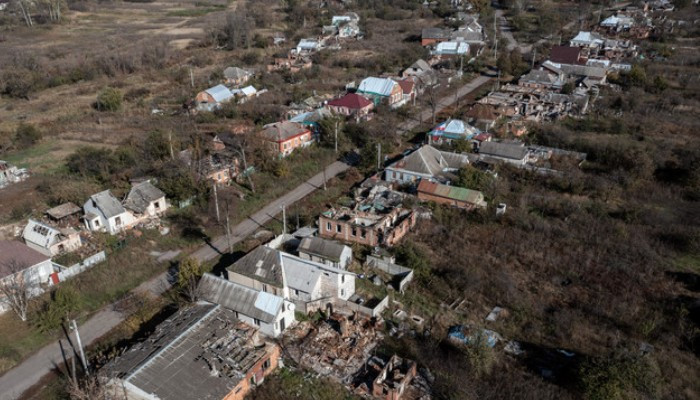 Lockheed Martin plans to increase production of its High Mobility Artillery Rocket System, a weapon in high demand in Ukraine and across Europe as Russia continues to sow instability in the region. The company is poised to boost HIMARS production to 96 launchers annually, up from its current level of 60 launchers, CEO Jim Taiclet told investors during a third quarter earnings call on Tuesday. The 20 HIMARS sent to Ukraine by the U.S. since the summer have had an outsized effect on the battlefield, allowing Ukrainian forces to reach dozens of miles behind Russian front lines in the Donbas and around Kherson. In anticipation of the requests, the company invested $65 million about six months ago to shorten the manufacturing time for HIMARS before receiving a contract from the Pentagon, Taiclet said. Lockheed Martin is also considering expanding its facility in Camden, Ark., as demand continues to grow, he added. “We’re cross-training our skilled workforce across a bunch of product lines,” so that as demand grows for HIMARS or the Guided Multiple Launch Rocket System, people can move between building different types of weapons, Taiclet said. But it will likely take the company months to ramp up production from five to eight systems a month, which may not be fast enough for Estonia, Poland and Ukraine to strengthen their militaries in the face of Russian aggression. Building new industrial capacity isn’t like flipping a switch, and supply chains take time to spin up to meet new goals, which include hiring and training new workers. That timeline has led some countries to begin looking elsewhere for rocket launchers. Poland, for example, after learning that the 500 HIMARS it was seeking would not begin to arrive for years, opted this week to buy 300 Chunmoo multiple-rocket launchers built by South Korea’s Hanwha that will be delivered in 2023, Polish Defense Minister Mariusz Błaszczak told local media. “We decided to split the HIMARS order into stages,” he said. “We will have both the HIMARS and the Chunmoo.” Other countries are betting big on HIMARS. Lockheed Martin “confirmed that there is a slot for Estonia” on the production line, Defense Minister Hanno Pevkur told POLITICO. Estonia ordered six systems in July for $500 million. The U.S. Army is also putting pressure on Lockheed to increase production even further. Service acquisition chief Douglas Bush told reporters last month that the branch is aiming for a “doubling or more than doubling” of production rates, but noted that it would take time to get there. This means Lockheed may be asked to increase production to 120 HIMARS launchers annually. “There are sometimes limitations, physical limitations, where you can fill a factory, get it up to a production rate and then if you want to go higher you’re building another factory, or you’re finding another company to do the same thing somewhere else, which is also not overnight,” Bush said. “So, I’d say these goals are more in the high number of months to a year to try to get these increased production rates fully manifested.” |

Storm causes power outages and train disruption across Northwest France
329Yesterday, 11:42
Japanese novelist Ryu Murakami dies at 74
320Yesterday, 11:36
The Transcaucasian Trail, Armenia
36222.10.2026, 22:00
German youth plan France-style mass protests
52122.10.2026, 12:31
For the first time, UN says breaching 1.5C warming limit is ‘imminent and unavoidable’
63721.10.2026, 23:36
Russia says it will send first diesel cargo to US on Thursday
64321.10.2026, 22:24